Prof. Dr. Nicolai Hannig
Modern History
Chair
Contact
nicolai.hannig@tu-...
work +49 6151 16-57307
fax +49 6151 16-57464
Work
S3|12 403
Residenzschloss 1
64283
Darmstadt
Institute of History
Modern History
Chair
nicolai.hannig@tu-...
work +49 6151 16-57307
fax +49 6151 16-57464
Work
S3|12 403
Residenzschloss 1
64283
Darmstadt
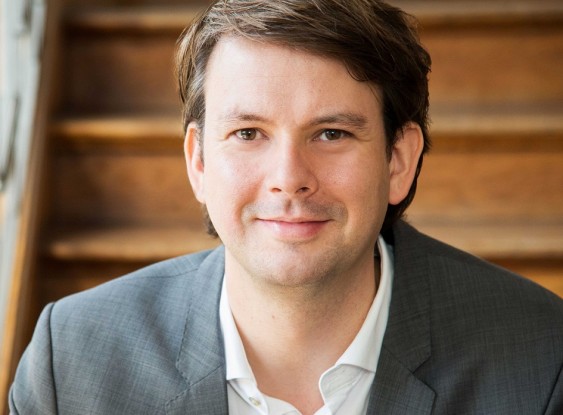
Nicolai Hannig has been Professor of Modern History at the Technical University of Darmstadt since October 2020.
Research interests:
German and European history of the 19th and 20th centuries
Environmental and urban history
Historical risk research
History of violence since 1800
Media and religious history
Monday, 15.12.2025, 9-11 a.m.
Monday, 12.01.2026, 9-11 a.m.
Monday, 19.01.2026, 9-11 a.m.
Monday, 26.01.2026, 9-11 a.m.
Monday, 02.02.2026, 9-11 a.m.
Monday, 09.02.2026, 9-11 a.m.
…and by appointment.
Please contact my assistant Giuseppina Amenta to register for the consultation hours.
For an appointment outside of the scheduled consultation hours please contact me directly.
Lecture
02-04-0100-vl Geschichte der Gewalt
mondays 13.10.2025 to 09.02.2026
16:15 – 17:55, Room S3 13/30
Seminar
02-04-0120-se Darmstadt – historische Ansichten. Ein Ausstellungsprojekt
Wednesdays, 15.10.2025 to 11.02.2026
09:50 – 11:30, Room S3 13/215
Exercise
02-04-0130-ue Filme der DDR
Tuesdays, 14.10.2025 to10.02.2026
09:50 – 11:30, Room S3 13/110
Oberseminar
02-04-0127-os Advanced Seminar Modern History/History of Technology
Tuesdays 14.10.2025 to10.02.2026
16:15 bis 17:55, Room S3 13/10
The exams for the associated private study course will take place on Thursday, February 19, 2026, starting at 9:00 a.m.
You can download the exam registration form HERE (opens in new tab). Please note that this form is only for the Department of Modern History.
Registration in TUCaN is required.
Further information and a reading list can be found HERE (opens in new tab).
Deadline for submitting the form: Friday, February 6, 2026, via email (PDF) to Giuseppina Amenta, email: giuseppina.amenta@tu-…
Further information on the requirements can be found in the central module handbooks of the Institute of History.
We would like to customise the information and usability of this website to your preferences and needs.
To this end, we use so-called cookies. Please choose which cookies you would like to enable when visiting our webpages.
Some of these cookies are required to load and correctly display this website on your device.
These are strictly necessary or essential cookies and cannot be deselected.
The preferences cookie saves your language setting, while the statistics cookie regulates
how the open-source statistical software “Matomo” analyses your visits to and activities on our website.
For more information about cookies we use, please refer to our
privacy policy.